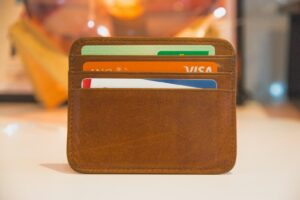
You’re standing at checkout, the total is bigger than you expected, and the cashier asks if you want to save 15-20% by opening a store card today. It’s a tempting pitch, and honestly, sometimes it’s a fine deal. Other times it’s how people end up with a card they regret a year later. The difference usually comes down to whether you understand what you’re signing up for before you say yes.
Store credit cards (also called retail cards) aren’t inherently bad. But they’re built differently than a typical cashback or travel rewards card, and those differences matter more than the one-time discount they dangle at you during checkout.
What makes a store card different from a regular credit card
A store card is issued specifically for use at one retailer or a small family of related brands — think a department store, a home improvement chain, or an airline’s in-house shop. There are two flavors. A “store-only” or closed-loop card can only be swiped at that retailer (in-store or online), full stop. A “co-branded” card carries a Visa or Mastercard logo and works anywhere, but it’s still marketed and often serviced through the retailer, usually by a bank that specializes in retail cards — Comenity and Synchrony are two of the biggest names behind the scenes.
The appeal is obvious: an instant discount on today’s purchase, easier approval than a lot of general-purpose cards, and sometimes ongoing perks like birthday coupons or early access to sales. The catch is that store cards, as a category, tend to run some of the highest interest rates in the industry — commonly landing well above the typical credit card’s rate, with plenty of retail cards sitting in the low-to-mid 30% APR range. A handful go even higher. That’s a real cost if you ever carry a balance, and it’s worth weighing against whatever discount got you to sign up in the first place.
The deferred interest trap hiding in “0% financing”
This is the part that catches people off guard, and it’s worth slowing down for. A lot of retail cards — especially the ones for furniture, electronics, and home improvement — advertise something like “no interest if paid in full within 12 months.” That sounds identical to a standard 0% intro APR offer you’d get on a regular credit card. It isn’t.
With a normal 0% intro APR, interest simply doesn’t accrue during the promo window. If you still owe money when the period ends, you start getting charged interest going forward, on whatever’s left.
With deferred interest, interest has been accruing the entire time in the background, on the full original purchase amount. If you pay off every last dollar before the deadline, that accrued interest gets wiped out and you really did get 0%. But if you’re even a few dollars short on the due date, the issuer can go back and charge you all of that backdated interest in one lump sum — often the full retail APR, applied retroactively to the whole purchase, not just the leftover balance. People who thought they were being careful, paying down the balance steadily, can still get hit hard if they miscalculate the payoff date by even a billing cycle.
If you take a deferred interest offer, the safest approach is to divide the purchase price by the number of months in the promo period and set up autopay for that amount (or more), then double check the balance is actually zero a month before the deadline — not just close to zero.
Credit limits and what they do to your utilization
Store cards tend to come with smaller credit limits than general-purpose cards, especially when they’re your first card or you’re rebuilding credit. A lower limit sounds like a built-in guardrail against overspending, and in one sense it is. But it also makes it easier to accidentally run your credit utilization high.
Utilization — how much of your available credit you’re using — is one of the bigger factors in your credit score, and card issuers generally like to see it well under 30% on each card and overall. On a card with a low limit, a modest balance can already push utilization past that threshold, while the same dollar amount on a card with a much higher limit barely registers. So even responsible spending can look worse on paper with a store card, purely because the ceiling is lower.
None of this means store cards are bad for your credit. Reported on-time payment history is on-time payment history regardless of which card it’s on, and store cards are often easier to qualify for if you have thin or fair credit — which is exactly the group that benefits most from an extra tradeline reporting positive payment history. Just keep balances low relative to the limit, and if you can, ask the issuer for a credit limit increase after 6-12 months of on-time payments to give yourself more room.
When a store card is actually worth it
Store cards make the most sense in a few specific situations. If you shop at one retailer heavily and would genuinely use ongoing perks — extra reward points at that store, free shipping, birthday discounts — the value can add up over time. They’re also a reasonable option if you’re building credit from scratch or recovering from a rough credit history and can’t yet qualify for a general rewards card; approval odds are typically more forgiving.
They make less sense as your only card, or as a way to finance a big purchase you can’t pay off quickly. If you’re eyeing a store card mainly for the one-time discount at checkout, do the math first: a modest percentage off today’s purchase is worth real money, but if you end up carrying that balance for a year at a rate well above what a typical general-purpose card charges, the interest can easily outrun whatever you saved. The discount only wins if you were paying that price anyway and you pay the card off fast.
A quick gut check before you say yes at checkout
Before opening a store card on the spot, it helps to ask a few quick questions: Will I actually shop here often enough to use the ongoing perks? Can I pay this purchase off within a couple of billing cycles, or is this a deferred interest offer I need to track closely? Do I already have too many open accounts, or would a hard inquiry right now hurt an upcoming loan application? None of these have a universally right answer — it depends on your situation — but asking them takes the decision out of the pressure of the checkout line, which is exactly where retailers want you making it.
Frequently asked questions
Do store credit cards hurt your credit score just by having one?
Not inherently. Opening one triggers a hard inquiry, which can ding your score by a few points temporarily, and a new account lowers your average account age slightly. Beyond that, a store card affects your score the same way any card does: through payment history, utilization, and how long you keep it open. Carrying a high balance relative to its (often low) limit is usually the bigger risk than the account itself.
Is a store card’s approval easier to get than a regular credit card?
Generally yes, particularly for closed-loop, store-only cards. Retailers want you shopping and spending, so they tend to approve applicants with fair or limited credit that might get declined for a traditional rewards card. Co-branded cards that carry a Visa or Mastercard logo usually have somewhat stricter requirements than store-only cards, though still often more lenient than premium travel cards.
What’s the actual difference between deferred interest and a 0% intro APR?
With 0% intro APR, interest doesn’t start accruing until after the promo period ends, and only on whatever balance remains. With deferred interest, interest has been accruing from day one on the full purchase amount — it’s just waived if you pay everything off by the deadline. Miss that deadline by even a small amount and the issuer can charge you all the backdated interest at once. Read the terms carefully; the two are easy to confuse and issuers aren’t always upfront about which one you’re getting.
Should I close a store card I don’t use anymore?
Not necessarily. An old account in good standing helps your credit history length and your overall available credit (which helps utilization), so closing it can sometimes cause a small dip in your score. If the card has no annual fee, there’s often little downside to keeping it open and just not using it, unless the temptation to overspend is a real concern for you personally.
Can a store card ever be a good primary credit-building tool?
It can work as a starting point, especially paired with a secured card or credit-builder loan if you’re establishing credit from nothing. The main limitation is that store cards, especially closed-loop ones, don’t do much for your credit mix or spending flexibility. Most people are better off treating a store card as one piece of a broader credit file rather than their only card long-term.
Rates, fees, and specific promotional terms mentioned above vary by issuer and card, and change over time — always check the current terms on the card issuer’s own site or your cardholder agreement before applying or making a purchase you plan to finance. This article is for general information and isn’t personalized financial advice.