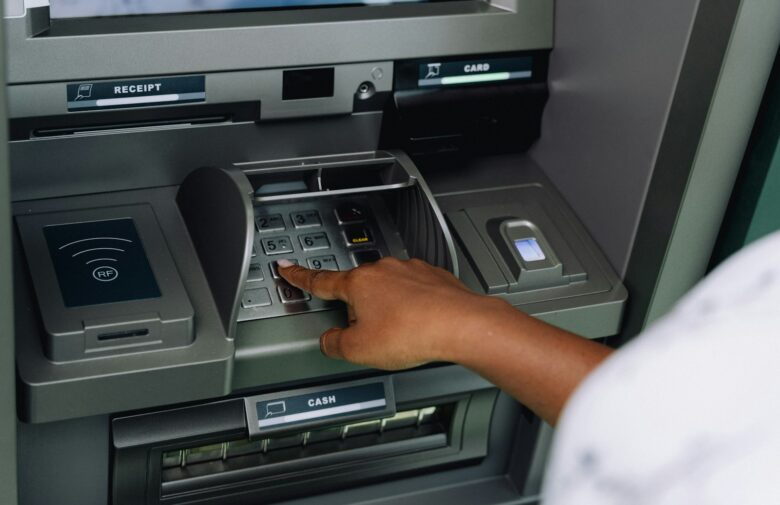
Say your car won’t start, the ATM near you only takes one kind of card, and payday is four days out. Pulling cash out on your credit card feels like the obvious move — it’s already in your wallet, the machine spits out bills, done. What most people don’t realize until the statement shows up is that a cash advance is one of the most expensive ways to borrow money that your bank will hand you without asking a single question.
Unlike a purchase, a cash advance starts costing you the second it hits your account. There’s no grace period, no 0% intro offer, and often a fee before you’ve paid a cent of interest. Here’s what’s actually happening when you tap that ATM screen, and what tends to work better when cash is the actual problem.
What counts as a cash advance
The obvious one is withdrawing cash from an ATM using your credit card and PIN. But issuers cast a wider net than most cardholders expect, and getting caught by a cash advance classification you didn’t see coming is one of the more common complaints in credit card forums. Depending on your issuer, these can also get coded as cash advances:
Convenience checks your issuer mails you and that you deposit or cash. Buying money orders or traveler’s checks. Wiring money between bank accounts. Buying foreign currency or cryptocurrency with the card. Gambling transactions, including online sportsbooks and lottery tickets. Using your card for overdraft protection on a checking account. And, depending on the issuer, sending money through apps like Venmo, PayPal, or Cash App when you fund the transfer with a credit card rather than a debit card or bank account.
That last one trips people up constantly. Peer-to-peer apps don’t always warn you that a credit-card-funded transfer will post as a cash advance instead of a purchase, so it’s worth checking your card’s terms if you regularly send money that way.
The three costs stacked on top of each other
A cash advance isn’t one fee, it’s three separate costs layered together, and each one makes the others worse.
1. An upfront cash advance fee
Most issuers charge somewhere around 3% to 5% of the amount you take out, or a flat $10, whichever is higher. That fee gets added to your balance immediately, so you’re paying interest on the fee itself, not just the cash you withdrew.
2. A higher APR than your purchase rate
Cash advance APRs typically run several points above whatever rate you’re paying on regular purchases, and they’re not tied to any promotional rate you might have. That 0% intro APR you got for buying furniture doesn’t apply here, cash advances are almost always excluded from promotional financing.
3. No grace period at all
This is the part that catches people off guard. Federal rules require issuers to give you a grace period of at least 21 days on purchases before interest kicks in, as long as you paid your previous balance in full. Cash advances don’t get that courtesy. Interest starts accruing the day the transaction posts, whether or not you pay your bill in full and on time.
Put those three together and a few hundred dollars in emergency cash can end up costing noticeably more than the same amount borrowed almost any other way, especially if it takes a few months to pay off.
The payment allocation rule most people don’t know about
Here’s a detail that actually works in your favor, but only if you understand it. Under the Credit CARD Act of 2009, when you pay more than your minimum due on a card carrying multiple types of balances, the extra amount has to go toward whichever balance carries the highest APR first. Since cash advances usually carry the highest rate on the card, any payment above the minimum should chip away at that balance before touching your regular purchases.
The catch is the word “minimum.” If you’re only paying the minimum each month, issuers have more flexibility in how they apply it, and your cash advance interest can keep compounding in the background while your statement makes it look like you’re making progress. If you’ve got a cash advance sitting on a card with other balances, paying more than the minimum is the only way that CARD Act protection actually helps you.
How it can quietly dent your credit score
A cash advance doesn’t show up on your credit report as its own line item. Credit bureaus don’t see a difference between $500 of cash advance debt and $500 of purchase debt sitting on the same card. What they do see is your balance, and that’s where the damage happens.
Credit utilization, how much of your available credit you’re using, makes up a meaningful chunk of your score. Add a cash advance to an already-carrying-a-balance card and you can push your utilization ratio well past the point where scoring models start penalizing you. Combine that with a higher APR working against you every month, and a cash advance that seemed like a quick fix can turn into a balance that’s genuinely hard to shrink.
When a cash advance still makes sense
None of this means a cash advance is never the right call. If it’s genuinely the only cash you can access before a real emergency gets worse, expensive money now can beat no money at all. The honest framing is that it should be a last resort you use deliberately and pay off as fast as possible, not a routine way to cover a shortfall.
Worth checking first: does your bank offer a small personal loan or line of credit with a lower rate? Do you belong to a credit union that offers a payday alternative loan, which exists specifically to undercut both payday lenders and cash advances? Can a 0% APR balance transfer card handle a purchase you were about to put on a cash advance instead, since balance transfers and cash advances are treated very differently by most issuers? Even asking a family member for a short-term loan, awkward as that conversation can be, is usually cheaper than what a cash advance will cost you by the time it’s paid off.
If none of those work and the cash advance is genuinely necessary, treat the payoff like a fire to put out. Pay it down as fast as your budget allows, pay more than the minimum so the CARD Act allocation rule actually kicks in, and avoid adding new purchases to the same card until the advance balance is gone.
Frequently asked questions
Does taking a cash advance hurt my credit score directly?
Not directly. There’s no “cash advance” flag on your credit report. The impact comes indirectly, through higher balances pushing up your credit utilization ratio, which is a factor scoring models weigh heavily.
Is a balance transfer the same thing as a cash advance?
No, and issuers usually treat them very differently. A balance transfer moves debt from one card to another, often with a promotional low or 0% rate for a set period. A cash advance pulls new cash against your credit line and typically carries a higher APR with no promotional period or grace period.
The one place they can overlap is currently: some issuers code balance transfer requests or convenience checks as cash advances if you use them to generate cash rather than pay off another creditor directly. Check your card’s specific terms before assuming a check or transfer counts one way or the other.
Why does my cash advance limit look smaller than my total credit limit?
Most issuers cap how much of your overall credit line can be accessed as cash, often somewhere in the range of 20% to 30% of your total limit. It’s a separate, smaller sub-limit, not the same number you see on your card statement as your full credit limit.
Will paying off a cash advance quickly avoid the fee too?
No. The upfront cash advance fee is charged the moment the transaction posts, regardless of how fast you pay it back. Paying quickly does limit how much interest piles on top of that fee, since interest starts accruing immediately with no grace period, but it won’t undo the fee itself.
Do debit card ATM withdrawals count as cash advances too?
No. Withdrawing cash with a debit card pulls directly from your bank balance and isn’t a credit card cash advance. The fees and interest described here are specific to using a credit card’s line of credit to access cash.
Cash advance terms, fees, and APRs vary by issuer and by card, and some of the details above (advance limits, fee structures, promotional exclusions) change from one card agreement to the next. Always check your specific card’s terms before assuming a number here applies to you, and when in doubt, call your issuer and ask how a particular transaction will be classified before you make it.